Healthcare is evolving — and so is the role of the Registered Dental Hygienist. As evidence continues to strengthen the connection between oral health and whole-body health, RDHs are increasingly positioned to serve as essential contributors on interprofessional healthcare teams in hospitals, Federally Qualified Health Centers, long-term care facilities, school-based health programs, and beyond.
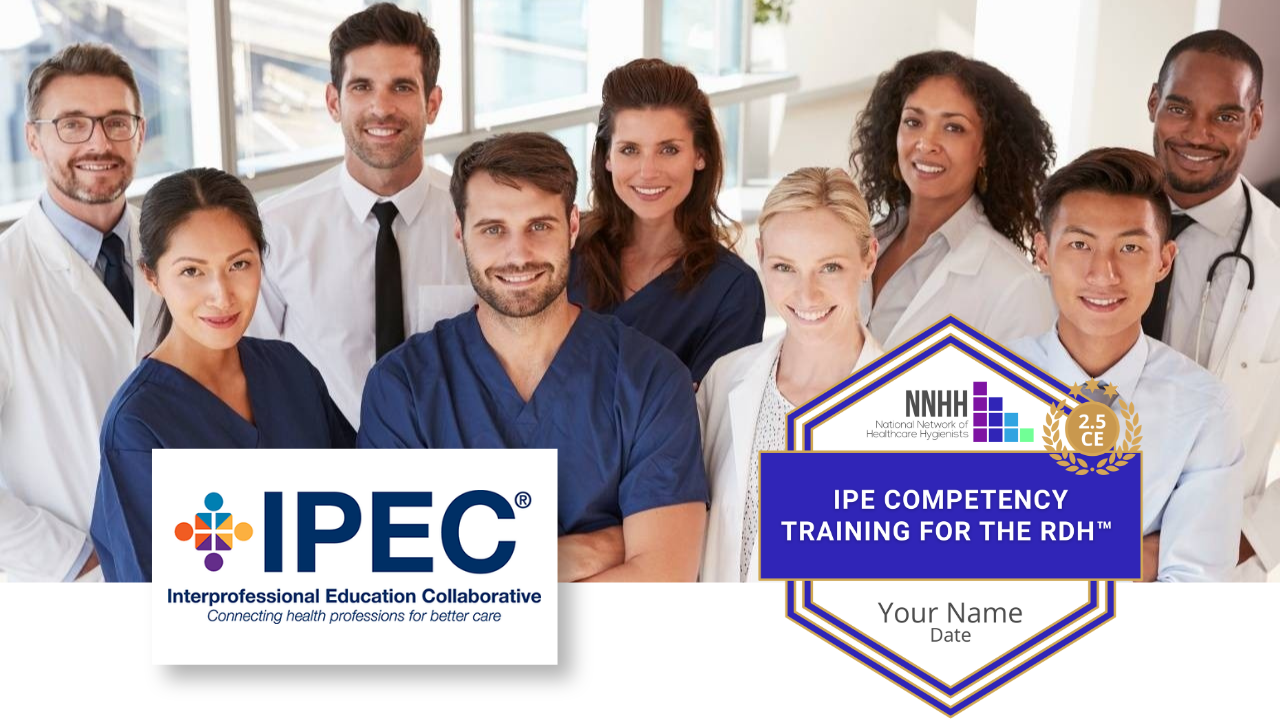
This course introduces participants to the Interprofessional Education Collaborative (IPEC) Core Competencies — the nationally recognized framework that defines the knowledge, skills, and attitudes required for effective team-based, patient-centered care. Through a combination of evidence-based content, real-world case examples, and reflective journaling, participants will explore how the RDH's unique clinical expertise, preventive focus, and patient relationships make them a valuable and credible member of any healthcare team.

"I recently completed the Interprofessional Education Competency Training for the RDH™ micro-credential, and I wanted to reach out personally to share how meaningful I found the experience. The training did more than provide me with additional knowledge. It gave me a framework and language for a professional direction I have been trying to articulate: helping dental hygienists and dental hygiene students recognize themselves as oral-health specialists and collaborative partners within whole-person healthcare."
Dawn Buju, MS EHRD-WALE Candidate, BSDH, RDH

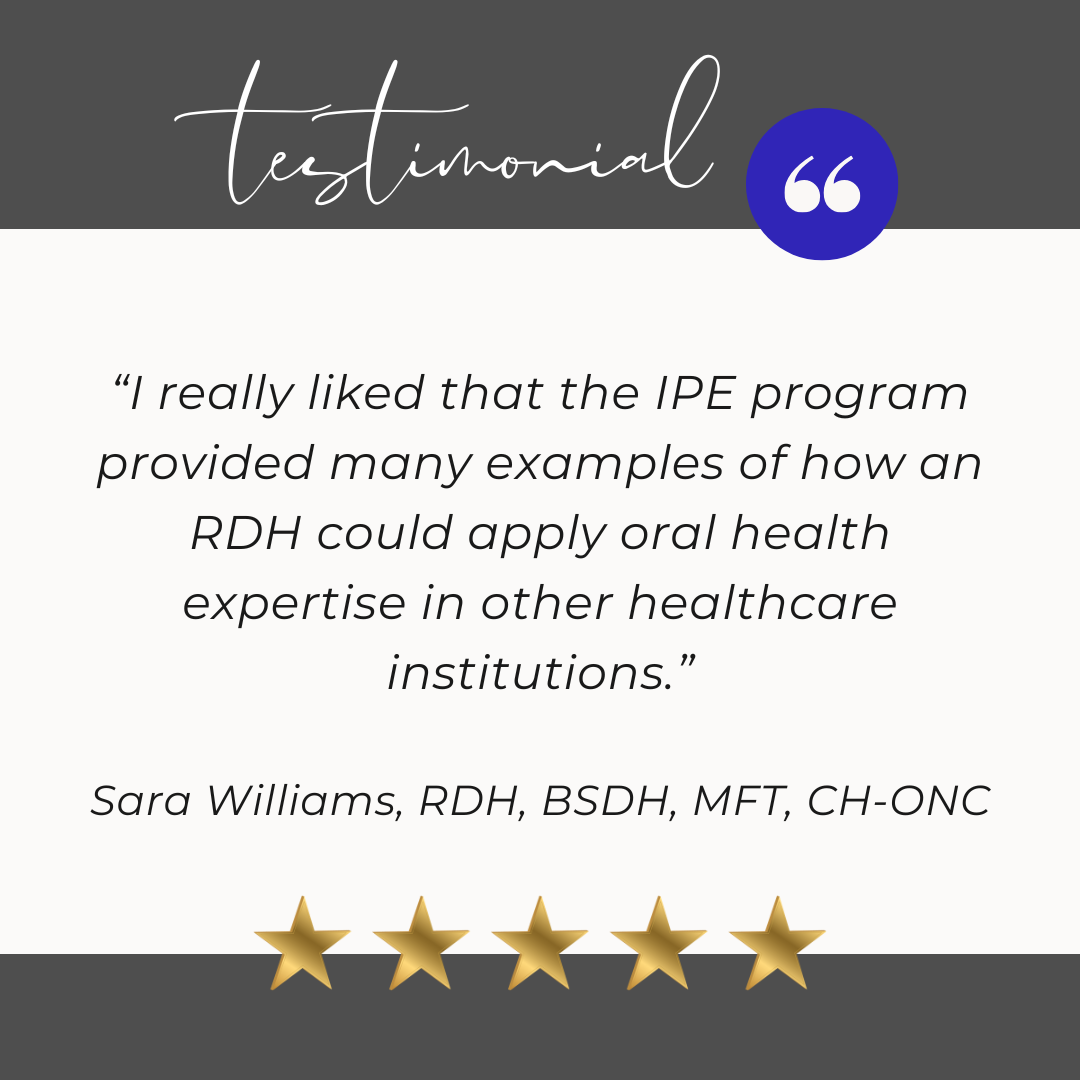
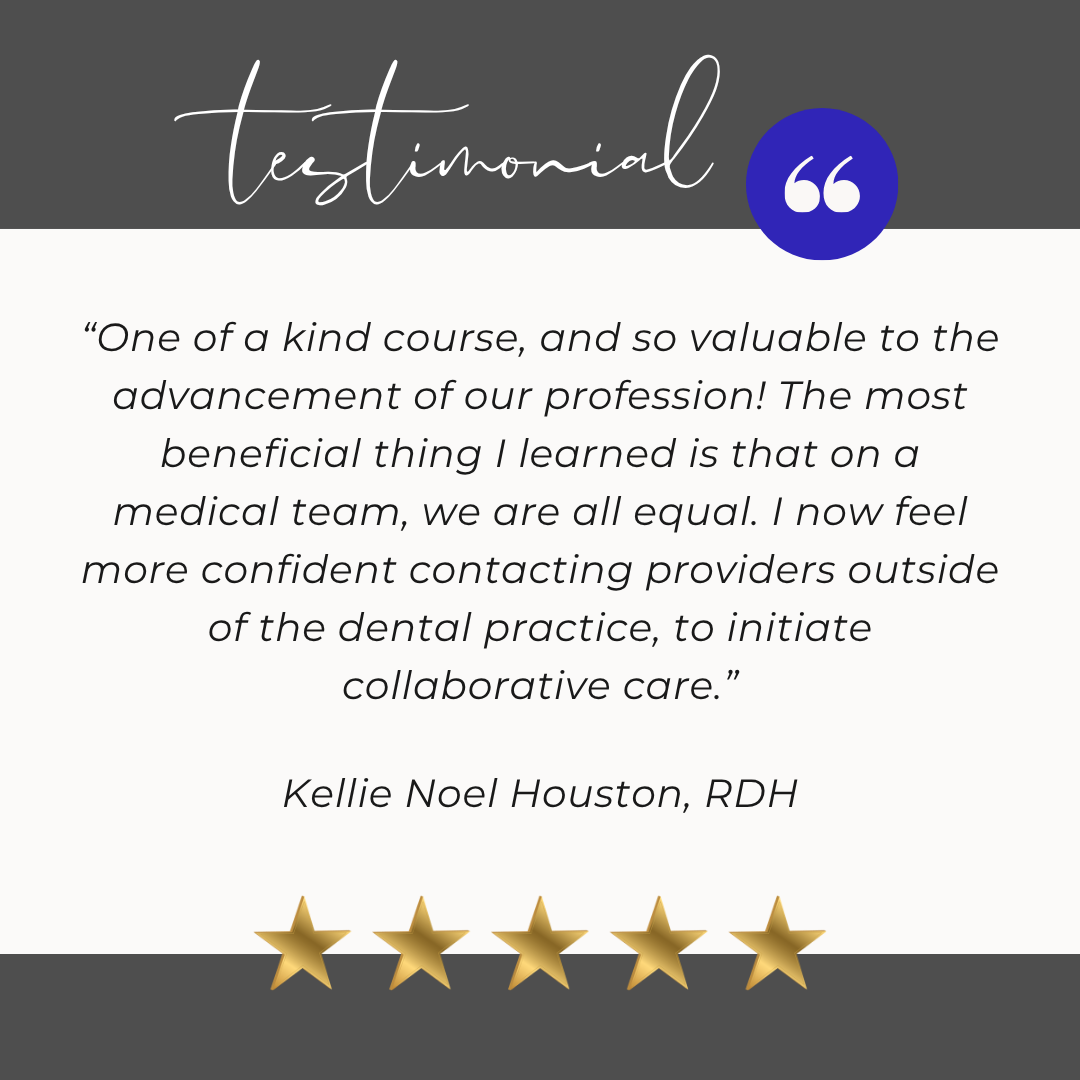
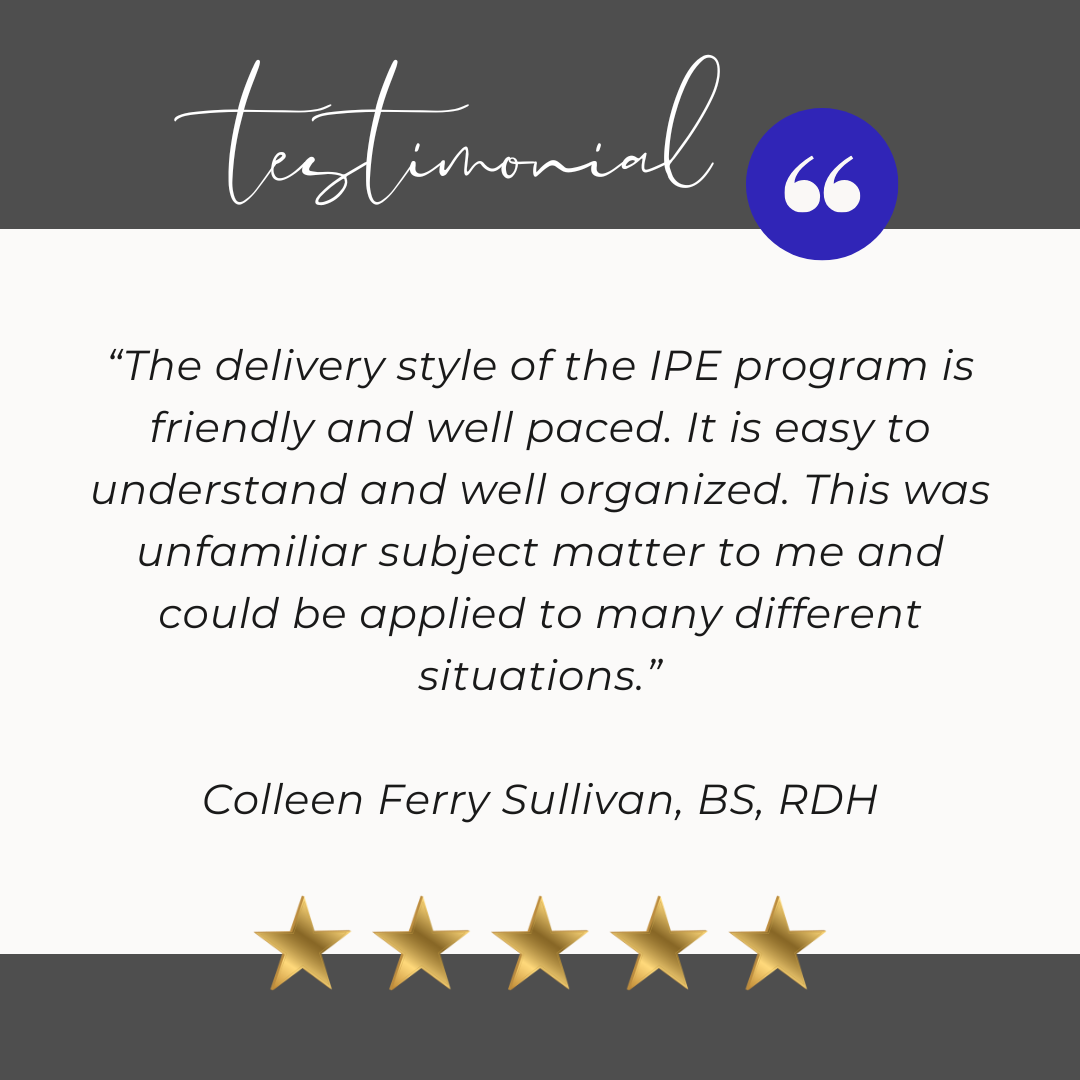
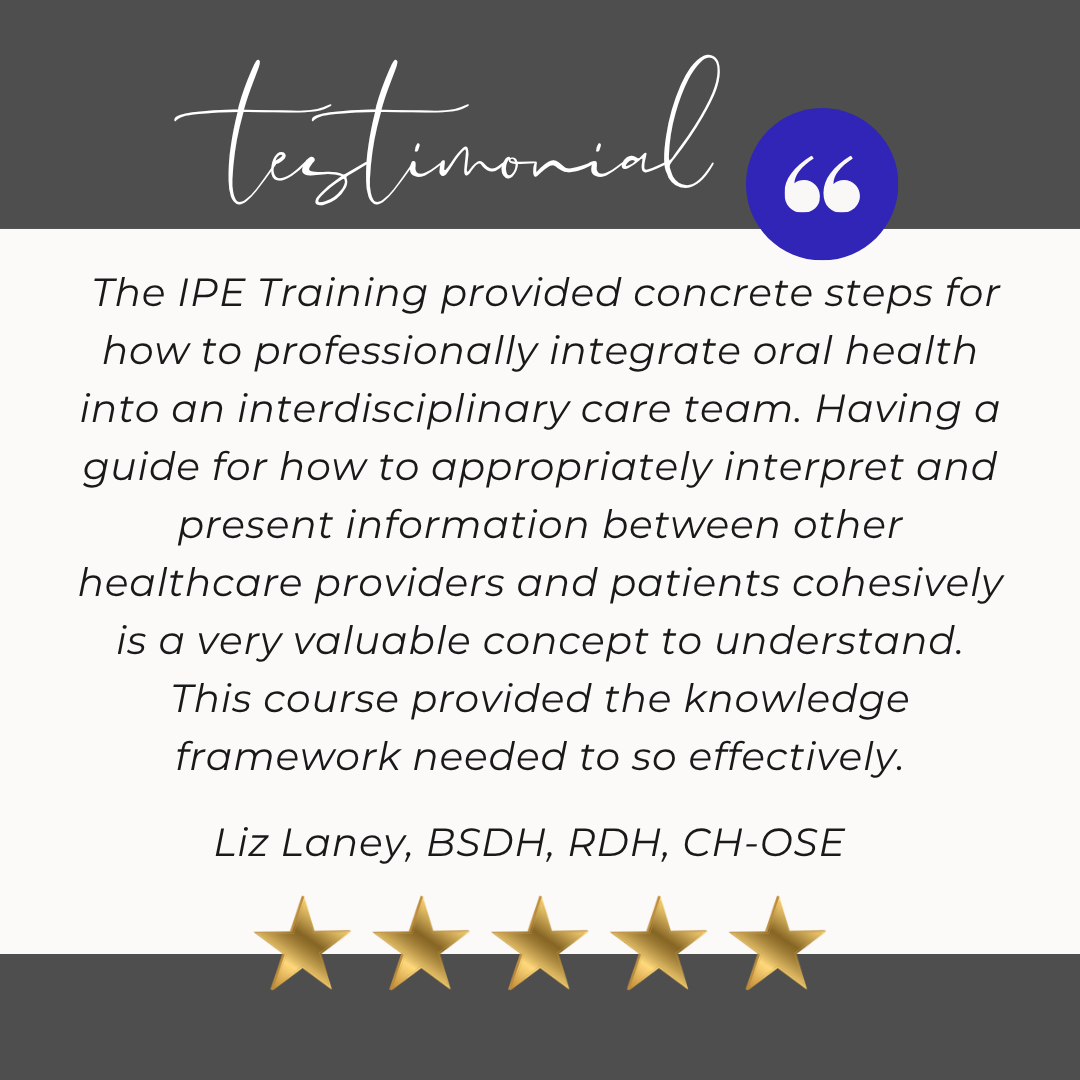
“The IPE Competency Program for RDHs helped me better understand how to meet healthcare team members where they are, communicate professionally, and clearly explain how my specific skills can support patient care. I now feel more confident in bridging our areas of expertise so we can work effectively together.”
Melissa Kjos Peterson, RDH, LAP, CH-OSE, CIHC
This activity has been planned and implemented in accordance with the standards of the Academy of General Dentistry (AGD) Program Approval for Continuing Education (PACE) through the joint program provider approval of UpScale Education, LLC and National Network of Healthcare Hygienists.

Meet Your Instructor
Jamie Dooley, BIS, RDH, CWDP is the Program Director at the National Network of Healthcare Hygienists (NNHH), the first organization dedicated to positioning dental hygienists as essential members of interprofessional healthcare teams. With 15 years of clinical practice and over a decade of experience in dental public health, and workforce development for dental hygienists, Jamie brings a rare combination of frontline clinical knowledge and systems-level thinking to this course. Under her leadership, NNHH launched the world's first ANSI-accredited certificate program for dental hygienists — built on global rigorous standards trusted by the medical world — establishing a new benchmark for post-license credentialing. A passionate advocate for medical-dental integration and a recognized thought leader in expanding the professional identity of the RDH, Jamie has spent years helping hygienists navigate the transition from clinical practice into broader healthcare roles. Her familiarity with the IPEC competency framework and its application to the RDH's emerging role in hospitals, FQHCs, and long-term care settings makes her uniquely qualified to guide you through this course — and through the next chapter of your career.
Learning Objectives
Upon completion of this course, the participant will be able to:
- Analyze the oral-systemic evidence base to articulate the clinical and workforce rationale for integrating Registered Dental Hygienists into interprofessional healthcare teams.
- Differentiate the roles, scope of practice, and professional responsibilities of the RDH within an interprofessional team across diverse healthcare settings, including hospitals, Federally Qualified Health Centers, and long-term care facilities.
- Examine each of the 33 IPEC sub-competencies and assess how they apply to the RDH's emerging role in non-traditional healthcare environments.
- Evaluate communication strategies, team dynamics, and ethical frameworks used by interprofessional teams and determine how RDHs can effectively adopt and model these behaviors.
- Construct a personal professional development plan that leverages the IPEC competency framework to position the RDH as a credible, contributing member of a healthcare team.
© 2026 National Network of Healthcare Hygienists · healthcarehygienists.org Content based on: IPEC Core Competencies for Interprofessional Collaborative Practice, Version 3 (2023)

Why is this program required for all NNHH certiticate programs?
Are existing certificate holders required to take this?
Who is this program for?
Will this course provide clarity on my career path?
What is included?
This is fully online - What if I have questions?
Will this course make me a Healthcare Hygienist?
How long will I have access to the program?
At NNHH, we know that knowledge has limited value without the ability to apply it. This foundational course helps dental hygienists articulate the value of their expertise, communicate confidently with multidisciplinary providers, and navigate evolving roles, practice settings, and career opportunities—regardless of career plans. These competencies matter for every healthcare provider, whether they have been practicing for 50 days or 50 years.
Learners enrolled in an NNHH certificate program who are not RDHs will also benefit from the IPEC Framework’s four domains and 33 sub-competencies. The course explores how oral-systemic health fits within healthcare and how to apply interprofessional collaboration concepts across professional roles.
This course must be completed once before an NNHH credential is issued and fulfills the requirement for all current and future NNHH credentials.
This curriculum was developed by the National Network of Healthcare Hygienists (NNHH), and the instructional design plan was built on ASTM E2659, the standard for certificate program accreditation.
© 2026 National Network of Healthcare Hygienists. All Rights Reserved.